
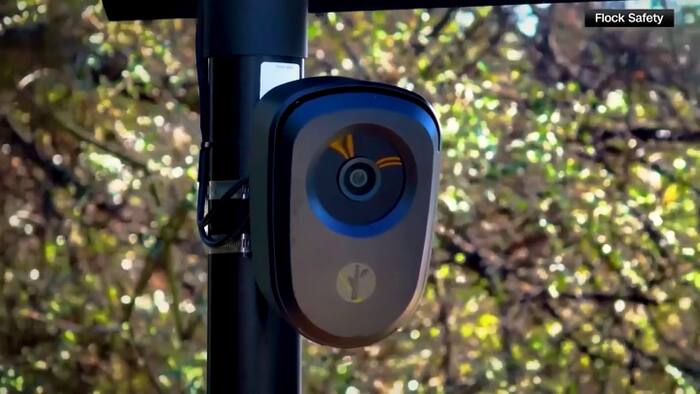
Hundreds of license plate cameras are scanning vehicles across Harris County, recording where you go, when you were there and potentially sharing that information with outside agencies, including federal immigration authorities.
For months, county leaders have struggled to answer basic questions about the system: Where are all the cameras? Who can search the data? How long is it kept? And who else can see it?
On Thursday, commissioners took a step toward finding out.
County leaders voted to create an oversight group led by Sheriff Ed Gonzalez, that will include other law enforcement agencies like the Constables Office, to recommend new rules for how Flock camera data is collected, accessed and shared. The group must report back to commissioners by February 2027.
But the cameras aren’t going anywhere in the meantime. While Commissioner Lesley Briones has taken all 61 Flock cameras on Precinct Four property offline, cameras in other precincts continue to operate — without the rules that commissioners say are still needed.
Flock cameras scan license plates and record when and where a vehicle is seen. Law enforcement agencies can search that information to help locate vehicles connected to criminal investigations.
Supporters say the technology can help investigators identify suspects, find stolen vehicles and solve serious crimes.
But critics warn that the system can also be used to track people’s movements, including people who are not suspected of committing a crime.
Concerns have also been raised about who can access the information and whether it can be shared with outside agencies, including federal immigration authorities.
Harris County Judge Lina Hidalgo has raised questions about how the camera system operates and what safeguards are in place to prevent misuse.
She wants answers about where the cameras are located, who can search the data, what they are looking for and how long the information is stored.
Hidalgo has also repeatedly asked to speak with someone from Flock, the company that makes the cameras, to get answers to those questions.
A county review identified gaps in the county’s records, including the lack of a complete, verified list of all license plate cameras operating across Harris County and all outside agencies that may have access to the data.
The review identified 154 Flock camera systems funded by Harris County. That figure does not represent every Flock camera operating throughout the county.
In May, commissioners approved changes to the county’s Flock contract. However, questions about oversight, data access and privacy remain.
Briones has taken all 61 Flock cameras on Precinct Four property offline.
Her decision does not affect cameras operating in other precincts, and commissioners’ latest vote does not require all remaining cameras to be turned off.
Instead, the county will use the new group to recommend changes to county contracts and develop rules for how law enforcement can use the information collected by the cameras.
The recommendations are expected to address concerns about data access, how the information is used and what safeguards may be needed.
During public comment at commissioners’ court, speakers called on the county to cancel its Flock contract and remove the cameras.
Terry Chen, a senior community organizer with Woori Juntos, raised concerns about the possible use of camera data by immigration authorities.
“We also know that law enforcement feeds Flock information to ICE,” Chen told commissioners.
Chen said the cameras create fear in immigrant communities and argued that the county should remove them.
Other speakers raised concerns about the potential misuse of surveillance data, including the possibility that information could be used to track or harass people.
The debate also reflects a broader disagreement over how the county should balance privacy protections with law enforcement’s use of technology to investigate crimes.
The newly created group will recommend changes to county contracts and develop rules for how law enforcement uses Flock camera data.
The group must report back to commissioners by February 2027. Commissioners will then have to consider what changes to make based on those recommendations.
Until then, Flock cameras in other precincts remain in use, despite the concerns raised about privacy, oversight and access to the information.
The central questions remain: Who should be allowed to search the data? What should they be allowed to use it for? And how can the county prevent the information from being misused?


