

Fans entering CarMax Park on opening night, April 7. (BizSense file photos)
The defamation lawsuit involving Richmond Flying Squirrels owner Lou DiBella and Diamond District developer Jason Guillot has been allowed to continue through the court process, though the judge in the case offered a stern opinion of the dispute at hand, calling it a “sophomoric soap opera.”
In a ruling Wednesday, U.S. District Judge David Novak denied Guillot’s request to dismiss the case, finding that DiBella had alleged “just barely enough” to clear a procedural rule’s “low bar” that requires that, in considering a motion to dismiss, the court accept DiBella’s allegations “as true and views the facts in the light most favorable to the plaintiff.”
As a result, Novak ruled: “(DiBella’s) suit survives — for now.”
“But,” the judge added, “the Court warns the parties that it will not look kindly upon any attempt to waste judicial resources for the airing of petty grievances. The law cares not for such trifles.”
DiBella has claimed that Guillot defamed him by allegedly telling Angie Rodgers, director of the Richmond Economic Development Authority that oversees the Diamond District and leases CarMax Park to the Squirrels, that DiBella threatened to kill Guillot and his family if Guillot didn’t agree to sell him a piece of land beside the ballpark’s entrance.
DiBella, who also names Guillot’s employer Thalhimer Realty Partners as a defendant, claimed the alleged defamation occurred when Guillot told Rodgers about the exchange, both verbally and in a written memo. Guillot and Thalhimer’s response to the original suit included a signed declaration from Rodgers that she never said to DiBella that Guillot had told her that DiBella threatened to kill him, and that Guillot never represented to her that DiBella had said the word “kill.”
Novak’s decision Wednesday means that the case could potentially go to trial, though not before a settlement conference that Novak has ordered that the parties take part in later this month. A five-day jury trial is set for next March, if the case gets that far.
While Novak’s order keeps the case alive, finding that DiBella had sufficiently alleged the seven counts of defamation he’s lodged against Guillot, the judge makes clear in his ruling his view of the case.
“Due to the highly deferential standard that the Court must apply at this stage — and for that reason alone — the Court hereby (denies) Defendants’ Motion to Dismiss,” Novak wrote, going on to quote Pittsburgh Pirates announcer Bob “the Gunner” Prince in saying that DiBella’s claims survive “by a gnat’s eyelash.”
“And,” Novak added, “that eyelash may well shrink as litigation progresses.”
“The Flying Squirrels and the wonderful CarMax Park bring great credit to the City of Richmond. This lawsuit does not,” Novak continued.
“Even accepting Mr. DiBella’s account of the events at issue, his conduct can at best be described as boorish. Indeed, his own partner apparently (and justifiably) apologized for his conduct,” Novak wrote, referring to a text message that Squirrels co-owner Larry Botel sent Guillot the day after the opening-night altercation at CarMax Park between Guillot and DiBella that’s at the center of the dispute.
Novak added: “All parties here would be better served by resolving their disputes at the bargaining table rather than dragging the Court into their sophomoric soap opera, particularly when Defendants may be entitled to attorneys’ fees should they ultimately prevail.”
Allegations ‘sufficiently pleaded’

The Richmond EDA suite during opening night, where an incident involving DiBella’s dog preceded the altercation between DiBella and Guillot in a nearby hallway.
The ruling responds to Guillot’s dismissal request, which argued that it was DiBella’s filing of his lawsuit that brought the altercation and alleged defamation against him to light, that the lawsuit confirmed the alleged defamatory statements are substantially true, and that it failed to allege malice in Guillot’s reporting about the incident to city officials in a memo.
Guillot also argued, citing a legal principle called the “single publication rule,” that DiBella cannot allege additional counts of defamation based on multiple media outlets’ news reports, including Richmond BizSense, of the memo Guillot wrote to city officials about the heated exchange between them that occurred April 7 at CarMax Park, during the Squirrels’ first game in the newly opened stadium following an incident in a suite involving DiBella’s dog.
In a filing last month responding to DiBella’s opposition to the dismissal request, Guillot’s attorney wrote: “DiBella plainly threatened Guillot with personal, professional and even physical harm. Thus, Guillot’s report of the heated encounter to relevant City Officials was substantially true, and Guillot’s description of DiBella’s bellicose behavior to those officials does not constitute defamation.”
Noting that the latest complaint was the third version of the lawsuit since DiBella filed it in May and twice amended it, Guillot’s attorney added: “Because the third iteration of DiBella’s complaint is a swing-and-a-miss, the Court should call DiBella ‘out.’”
However, Novak in his ruling determined that DiBella had sufficiently pleaded his allegations of defamation at this stage and that his claims are actionable in court.
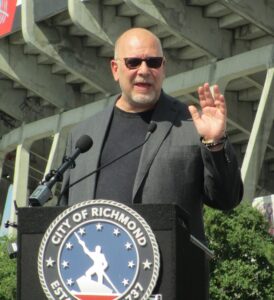
Flying Squirrels President Lou DiBella
Of DiBella’s account of the opening-night altercation, Novak states: “Plaintiff has alleged enough to survive even without a presumption of falsity, because the Court must draw all reasonable inferences in Plaintiff’s favor at this stage. Plaintiff has alleged specific details of an encounter that, viewing the facts in the light most favorable to him, materially differ from the version of events that Guillot allegedly communicated to City officials.”
The ruling notes that Guillot said in his memo that DiBella “threatened him and his family and, specifically, ‘threatened to “bitch slap”’ Guillot ‘because we won’t sell him that parcel,’ referring to a 0.8-acre parcel beside CarMax Park’s main outfield entrance that’s planned to include a retail building with a sports bar that DiBella says would compete with the Squirrels’ concessions.
“But,” the ruling adds, “Plaintiff alleges that he told Guillot at least three times that he would not hit him.”
“In this context,” the ruling continues, “one could reasonably infer that (DiBella) made clear that he would not hit Guillot. Additionally, (DiBella) sufficiently alleges that Defendant Guillot falsely accused Plaintiff of threatening him to force Defendants to sell him the Parcel.
“In (DiBella)’s telling,” Novak adds, “which the Court must credit at this stage, Plaintiff did not try to acquire the Parcel from Guillot on the night in question, demand that he relinquish it or condition any threats upon transfer of the Parcel. … One could reasonably infer that Defendant Guillot falsely claimed that Plaintiff conditioned threats upon transfer of the Parcel.”
Novak notes, however, that Guillot and Thalhimer Realty Partners, “advance a contrary inference,” acknowledging their argument that the alleged defamatory statements are substantially true.
“The Court finds Defendants’ interpretation of the alleged facts plausible, and that interpretation may well carry the day at a later stage when the Court reviews the incident under a different legal standard and considers a wider body of evidence,” the ruling states. “But proposing one plausible interpretation does not suffice … when Plaintiff also advances a plausible interpretation.”
News reports were ‘probable’ result
Novak also found that DiBella’s attorneys succeeded in arguing additional defamation counts against Guillot and Thalhimer based on news reports about the memo and its contents.
While Guillot and Thalhimer had argued that such reports cannot amount to additional defamation based on the “single publication rule” principle, the judge ruled that Guillot’s actions in writing the memo and allegedly leaking it to reporters “naturally and probably” resulted in the republications.
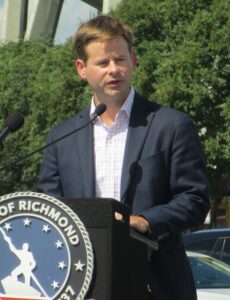
Jason Guillot of Thalhimer Realty Partners
“While Guillot’s submission of the Memorandum would likely not suffice on its own,” the ruling states, “tipping the media off to the existence of an inflammatory document on a matter of public concern does naturally and probably lead to that Memo’s republication.
“While Plaintiff’s suit may well have spurred media interest in the controversy generally, Plaintiff alleges sufficient facts showing that the lawsuit did not prompt the media to seek the Memorandum specifically. Accordingly, Defendants’ actions as alleged by Plaintiff still could reasonably be said to have naturally and probably caused the republication of the Memorandum.”
Guillot and Thalhimer had also argued that Guillot had a right to relay his recollection of the opening night altercation to city officials based on “qualified privilege,” in that the city had a legitimate interest in the matter because of its involvement in the overall Diamond District project. In his ruling, however, Novak determined that Guillot’s actions “abused and lost” that privilege.
“… one could reasonably infer that Defendant Guillot knew that Plaintiff did not threaten him or link threats to acquisition of the Parcel. After all, Plaintiff alleges that he repeatedly stated that he would not hit Guillot and did not condition threats upon transfer of the Parcel. These facts, viewed in the light most favorable to Plaintiff, support an inference that Guillot knew that Plaintiff did not threaten him to secure the Parcel but said so anyway.
“At this stage,” Novak added, “these allegations suffice. The Court may not now attempt to determine whether Guillot in fact knew that Plaintiff did not threaten him or whether Guillot in fact made these allegations out of spite. The Court must instead assume the truth of plaintiff s well-pled allegations and ask whether Plaintiff has stated a claim for relief. He has.”
DiBella is represented in the case by Nicholas Brechbill and Carolyn Wesnousky of Alexandria-based Clare Locke and is seeking punitive damages of “tens of millions of dollars” to be determined by a jury, and an injunction prohibiting Guillot and Thalhimer from repeating or republishing the claim that DiBella threatened Guillot.
Guillot and Thalhimer are represented in the case by Harold Johnson, Turner Broughton and Amanda Bird-Johnson with Richmond-based Williams Mullen. In addition to dismissal of the case with prejudice, they’re seeking award of attorneys’ fees for defending the case and any other relief determined by the court.
Reached Wednesday, Johnson declined to comment on the ruling. A request for comment to Brechbill was not returned.
The post Judge: Flying Squirrels owner’s defamation lawsuit can continue – ‘for now’ appeared first on Richmond BizSense.


